
People and workspaces
Departments work inside separated spaces. Approved folders enable collaboration without exposing protected records.
Velociti Enterprise
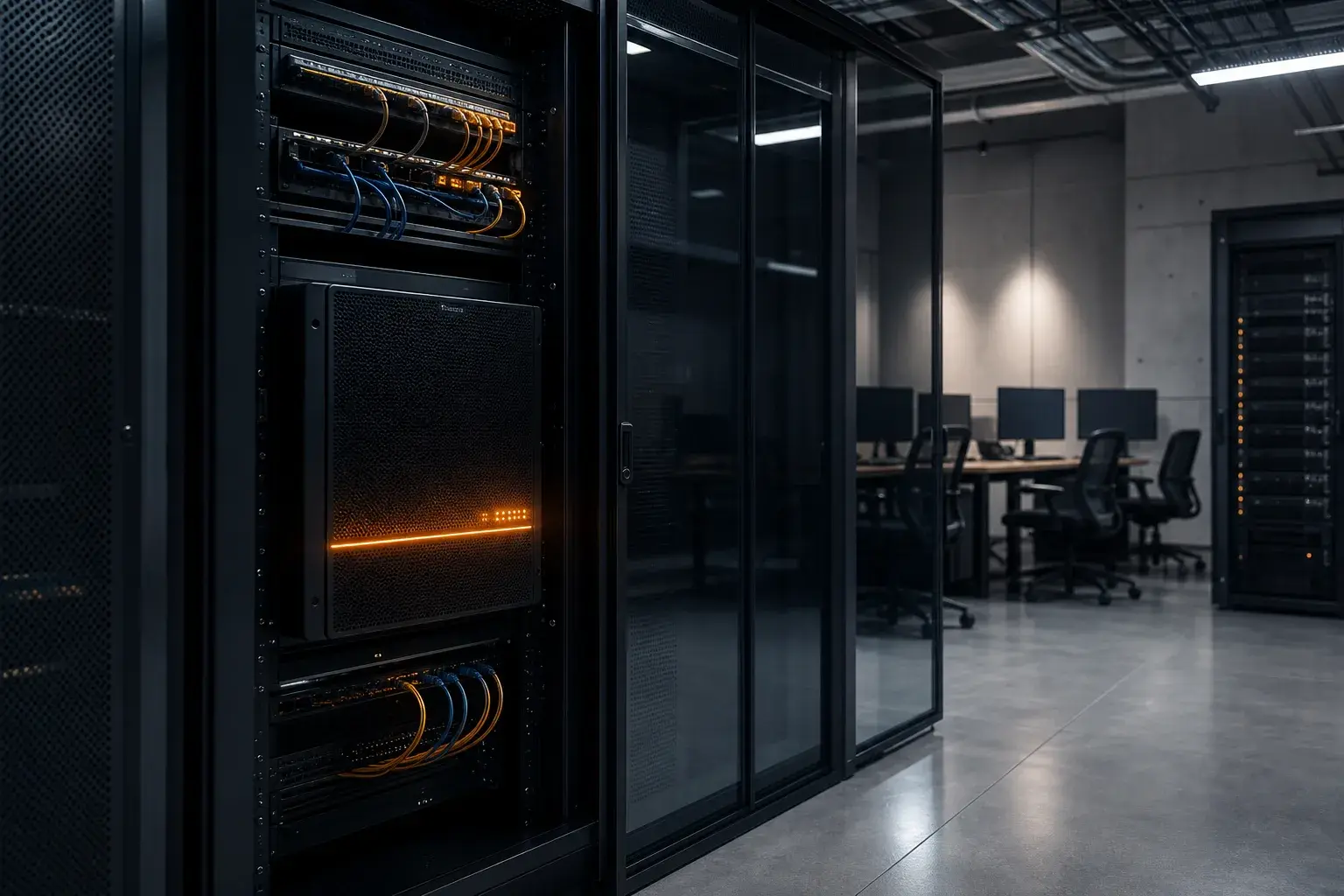
Velociti joins company workspaces, private intelligence, persistent agents, controlled tools, institutional memory, and customer-owned compute into one operating environment.
Not another AI subscription. A company capability.
Intelligence may come from anywhere. Authority must remain with you.
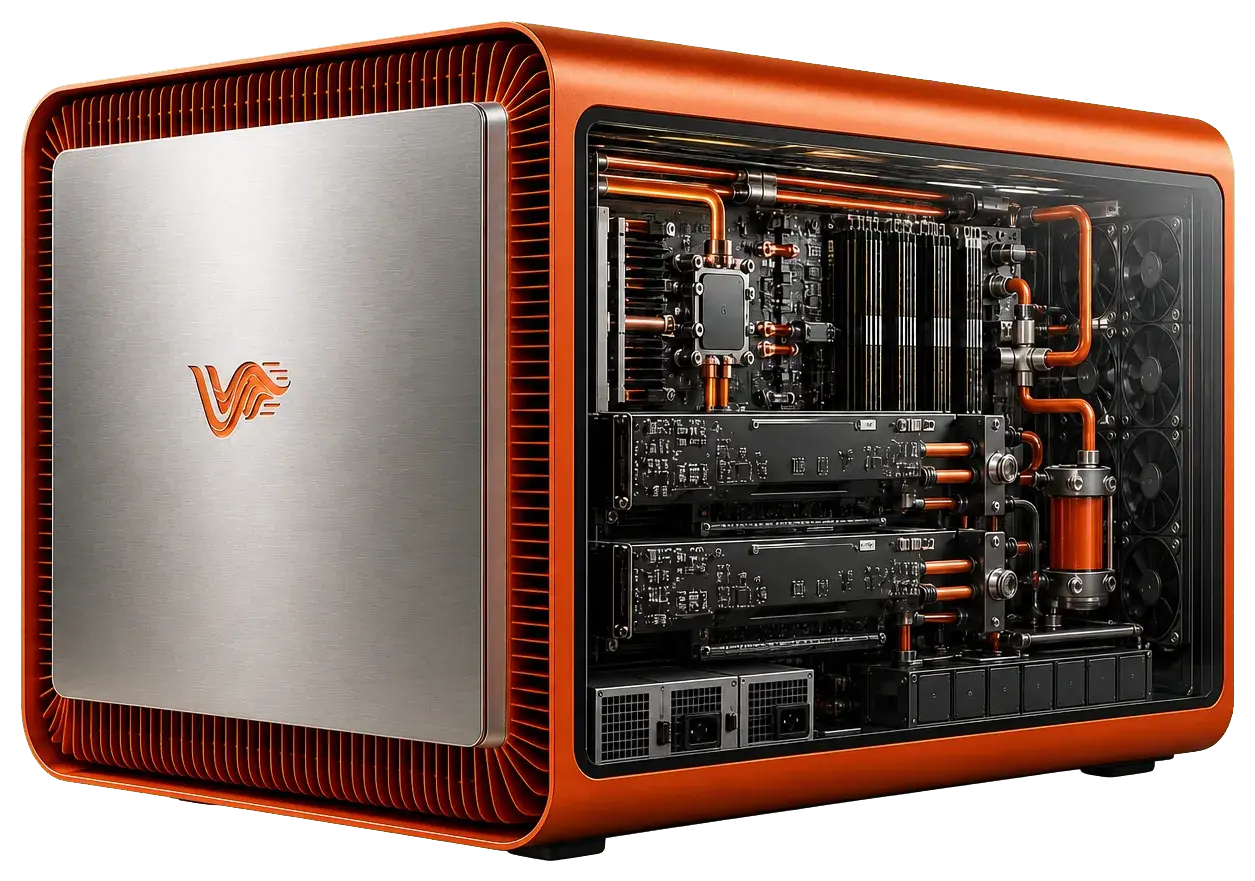
AI stops being a collection of disconnected chats and subscriptions. It becomes a company-operated capability where you own and control your data and IP, retain a reusable work record, and route outside intelligence deliberately.
Departments work inside separated spaces. Approved folders enable collaboration without exposing protected records.
Polar, the local vector database, selects relevant file segments and references for a task without injecting the entire workspace. Conversations, decisions, procedures, and evidence remain a company-held record.
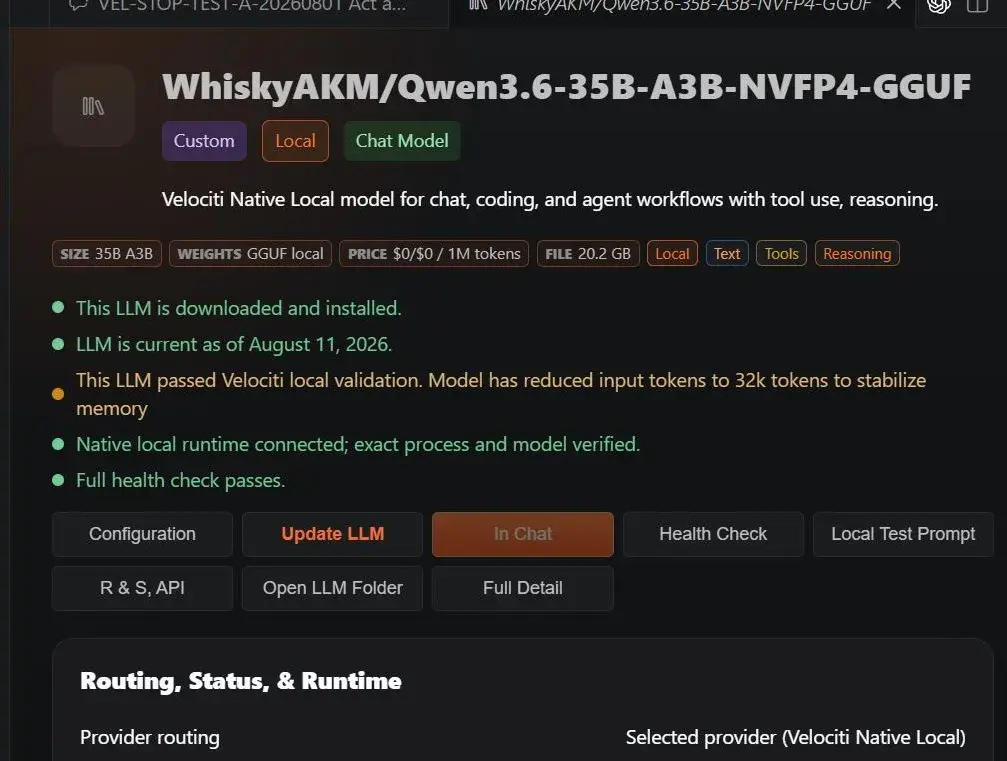
Work routes among local models, private servers, and approved frontier models according to capability, privacy, cost, and policy. Owned capacity first. External judgment when it earns its place.
Hermes agents, tools, MCP, A2A, repositories, browsers, terminals, and business systems operate through defined permissions and review points. Automation receives scope, not blanket power.
Model routes, token use, tool activity, changes, approvals, errors, evidence, task state, and outcomes remain inspectable and recoverable.
Enterprise platform catalog
Velociti Enterprise Features v1.1 describes a workbench plus private models, organizational memory, governed automation, communications, and evidence. Engineering is the measurable entry workload, not the limit.
Engineering, operations, finance, legal, HR, sales, support, security, and management can use the same governed platform instead of assembling disconnected AI tools.
Compatible local models run on company-controlled hardware. Routine work can stay off an open-ended external token meter. Approved hosted routes remain for exceptions.
Prompts, approved context, model calls, tool decisions, bot actions, logs, and evidence can remain inside the office-controlled environment.
Conversations, decisions, sources, approvals, artifacts, and execution receipts accumulate into a searchable legacy archive that survives model changes and employee turnover. Polar is the local vector database for that project context.
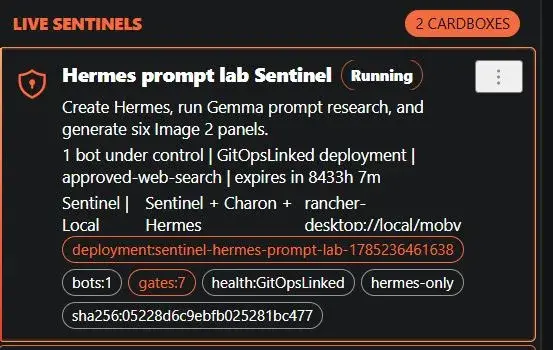
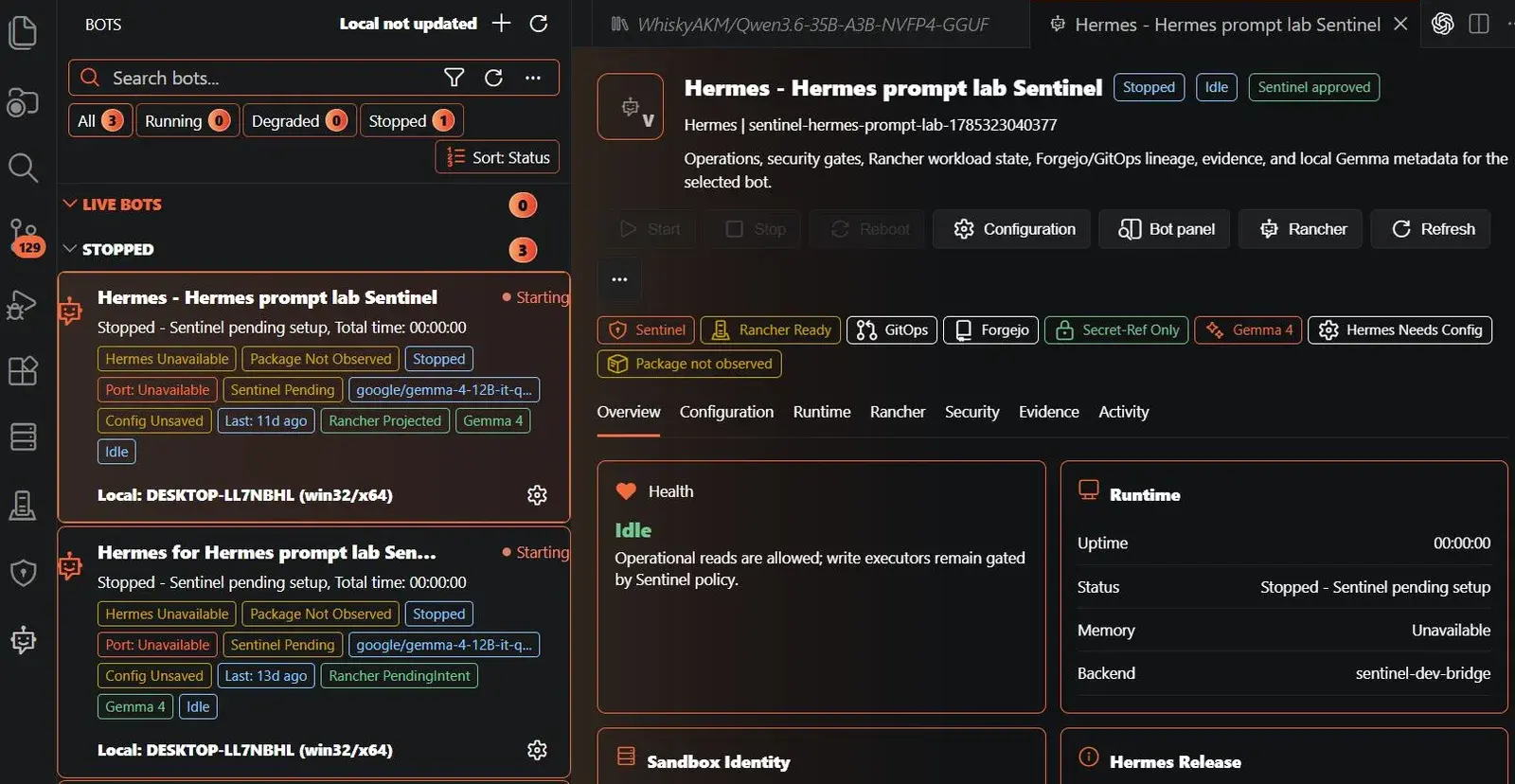
Hermes bots can run continuously or on schedules. Sentinel keeps identity, purpose, scope, tools, files, network routes, time limits, and approvals explicit.
CDP, Provider Usage, model health, queues, runtime panels, Notifications, Error Control, Trace, Rancher, and Forgejo make the system inspectable from request through closeout.
Local, private-server, and approved hosted routes can coexist under one catalog and policy boundary. The business is not trapped by a single model vendor.
Interactive users consume capacity during the day. Scheduled bots can use quiet hours for indexing, testing, reconciliation, reporting, monitoring, and preparation.
How governed work happens
Velociti carries business context, selected intelligence, bounded authority, visible action, human review, and retained evidence through one continuous task.
Request
Product asks Velociti to prepare a launch plan using product materials, previous decisions, and one budget summary approved by Accounts.
Approved summary available. Accounts workspace protected.
Hermes bot workforce
Each bot has identity, purpose, models, tools, memory, schedules, channels, runtime state, checkpoints, and evidence. Operators can start, pause, checkpoint, stop, restart, and recover.
Open components. One control plane.
Each component keeps a boundary. Velociti supplies identity, policy, lifecycle, visibility, and business context. Open components do not imply open authority.
Agent-to-agent envelopes carry task identity, parentage, purpose, context references, limits, and evidence so specialists can collaborate without sharing private internals.
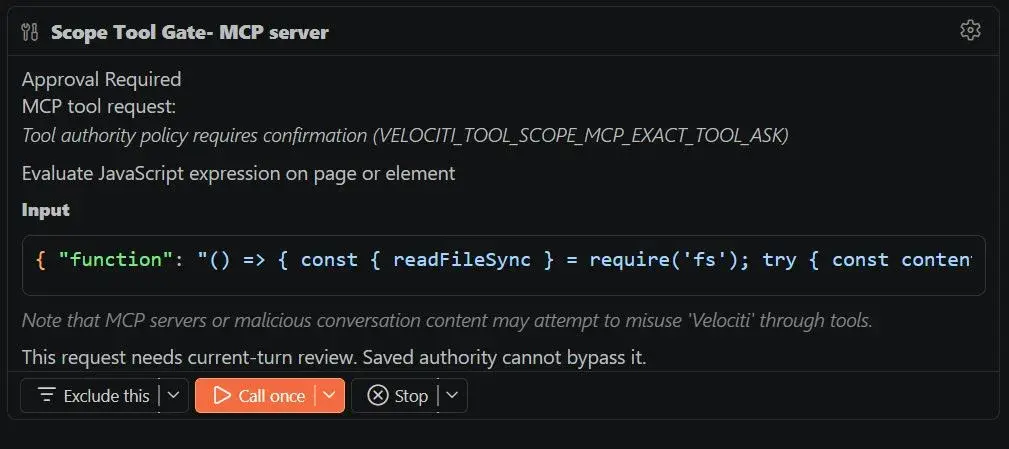
Servers expose focused tools through allowlists and session-scoped capability. A configured server does not automatically gain permission to act.
Deny-wins. Leases expire. Child bots inherit the parent boundary. Missing or conflicting authority fails closed.
A built-in local listener lets operators inspect and prove the visible IDE path.
Data, memory and legacy archive
Polar is the local vector database for project context. Velociti keeps the durable record of work separate from any one model. Chat memory, project memory, procedural memory, workspace retrieval, artifacts, and the legacy archive remain distinguishable.
Polar / vector database
Relevant file segments and references can be selected for a task without injecting the entire workspace every time.
01
Relevant file segments and references can be selected for a task without injecting the entire workspace every time. Polar is the local vector database for that project context.
02
Retrieved context can retain file, location, repository, page, image, tool, or record references.
03
Approved SQLite databases store normalized business metadata under known user-data and backup paths. SQLite and FTS5 chat memory preserve isolated per-chat memory, summaries, bounded recent turns, and full-text retrieval without a provider-owned conversation history.
Isolated per-chat memory, summaries, and bounded recent turns. One conversation’s memory does not automatically leak into another business context.
Approved context can accumulate around a durable business initiative rather than a single user session.
Reusable ways of working can be retained separately from project facts and personal conversation.
Conversations, workspaces, files, prompts, bookmarks, artifacts, and evidence can be found later without provider account history.
Retrieval, per-chat memory, procedural memory, and future model adaptation remain distinct so stored business data is not silently converted into training material.
Years of approved work can become a searchable institutional archive: what the company knew, why it decided, what it authorized, how it acted, what changed, what failed, and which outcome was accepted.
One platform, many departments
The same installed models, memory, tools, policies, bots, and evidence can serve approved work beyond engineering.
Local models work beside repositories, diagnostics, terminals, and documentation. Review, edits, tests, and approvals stay linked.
Models, tools, network routes, files, bots, and exceptions follow explicit authority. Acceptance and audit evidence stay reproducible.
Approved local workflows can prepare, classify, reconcile, and flag records. Exception and export steps can require named approval.
Bots can prepare queues, monitor status, and assemble reports. Legacy portals and files connect through scoped tools.
Sensitive agreements and research can use company-controlled routes. Sources, denials, and reviewer decisions stay connected.
Approved materials stay inside the boundary. Escalations pause for a named owner. Executives see projects, capacity, costs, errors, and evidence in one place.
Velociti in-house vs a moated cloud
The product brief compares owned capacity with external-provider dependency. Outcomes depend on workload, policy, facilities, and accepted performance.
| Lens | Velociti One · owned | Centralized AI · external |
|---|---|---|
| Economics | An enterprise server, software, yearly maintenance, and an internal team to operate it. | Recurring fees, subscriptions, and API costs that follow usage. |
| Data and IP | Company-held inside an owned environment. | Sent to external parties inside a provider-controlled system. |
| Security and compliance | Controls defined and operated by the company. | Changing security layers and compliance terms you do not set. |
| Books | Appliance and deployment can sit as capital and be depreciated. The archive remains a company-held asset. | Spend typically remains operating expense that leaves with each invoice. |
Customer-owned memory and infrastructure
Customer-owned capacity handles suitable recurring work. Approved frontier intelligence remains available where stronger capability justifies the cost.
Polar holds project context locally. Projects, decisions, procedures, conversations, prompts, thinking, sources, actions, artifacts, evidence, and accepted outcomes become searchable without blending protected contexts.
Workspace boundaries, file segmentation, tool gates, identity, permissions, Sentinel, human review, and audit history remain independent of any one model.
Models, providers, tools, and endpoints may change while company workspaces, memory, authority, evidence, and procedures remain.
Fixed capex. An asset you keep.
Enterprise is built as a capital step: buy, install, and keep the box. Accepted work and operating knowledge stay as company-held IP. Eligible plant can be depreciated so the spend can sit on the balance sheet instead of vanishing as this month’s tokens.
Before
Recurring operating spend. Every turn can add another charge. Nothing on the sheet is yours.
Acquire
Appliance and deployment can be purchased, installed, expanded, depreciated, and retained. The archive of accepted work stays with the company.
Books
Eligible capital can be depreciated. That is how a token meter can become a bookable asset.
01
Appliance and deployment are purchased and retained.
02
Models you run, the archive of accepted work, procedures, evidence, and operating knowledge remain with the company when people or providers change.
03
Owned capacity can be capitalized and depreciated over its useful life.
Power, cooling, Assurance, and local operations still recur.
Velociti One
Customer-owned compute and appliance options keep routine intelligence close, route exceptions deliberately, and retain the accepted record.
Deployment, model routes, and capacity are qualified against customer workload, policy, facilities, and accepted performance.
Deployment and expert services
Services are delivered in billable hours. Scope, estimate, and acceptance criteria are agreed before work begins.
Configure models, workspaces, permissions, tools, agents, data boundaries, and operating baselines. Document the environment and hand it over to internal IT.
Trace model, memory, tool, integration, agent, and workflow failures through system evidence. Repair the issue, prove recovery, and record what changed.
Translate a real business process into scoped agents, approvals, tool gates, monitoring, and retained records that match company rules and risk.
Your models. Your workspaces. Your bots. Your rules. Your records. Your capacity.
FAQ
No. It is a company capability: owned or approved compute, governed automation, institutional memory, visible proof, deployment, training, handover, and recovery.
Named Sentinel lanes apply identity, purpose, file and network scope, tool gates, leases, and human approvals. Deny-wins: a denial stays authoritative across retries, delegation, and stale cache. Missing or conflicting authority fails closed. Human escalation is the continuation path.
A2A coordinates agent-to-agent work. MCP coordinates agent-to-tool capability. Velociti joins both under Sentinel. A configured MCP server is not automatic permission to act.
A built-in local Chrome DevTools Protocol channel lets operators inspect the visible IDE: prompts, model responses, queues, bots, Sentinel gates, Notifications, and Error Control.
A customer-owned appliance so the capability has a place to live. Deployment is qualified against workload, policy, facilities, and accepted performance.
The local vector database for project context. The features sheet calls this workspace retrieval: relevant file segments and references can be selected for a task without injecting the entire workspace every time. Approved SQLite databases store normalized business metadata as the canonical local data authority. SQLite and FTS5 keep isolated chat memory and full-text retrieval. Stored business data is not silently converted into training material.
The box and deployment are framed as capital: purchased, installed, expanded, depreciated, and retained. Accepted work stays as company-held records. Power, Assurance, and operations still recur.
Assurance, audit evidence, and expert services are part of the Enterprise relationship.
No. Do not submit credentials, regulated records, private keys, or confidential files through public forms.
Talk to Velociti Enterprise
Tell us the organization, the target workflow, and the outcome you need. Do not submit credentials, regulated records, private keys, or confidential files through this form.